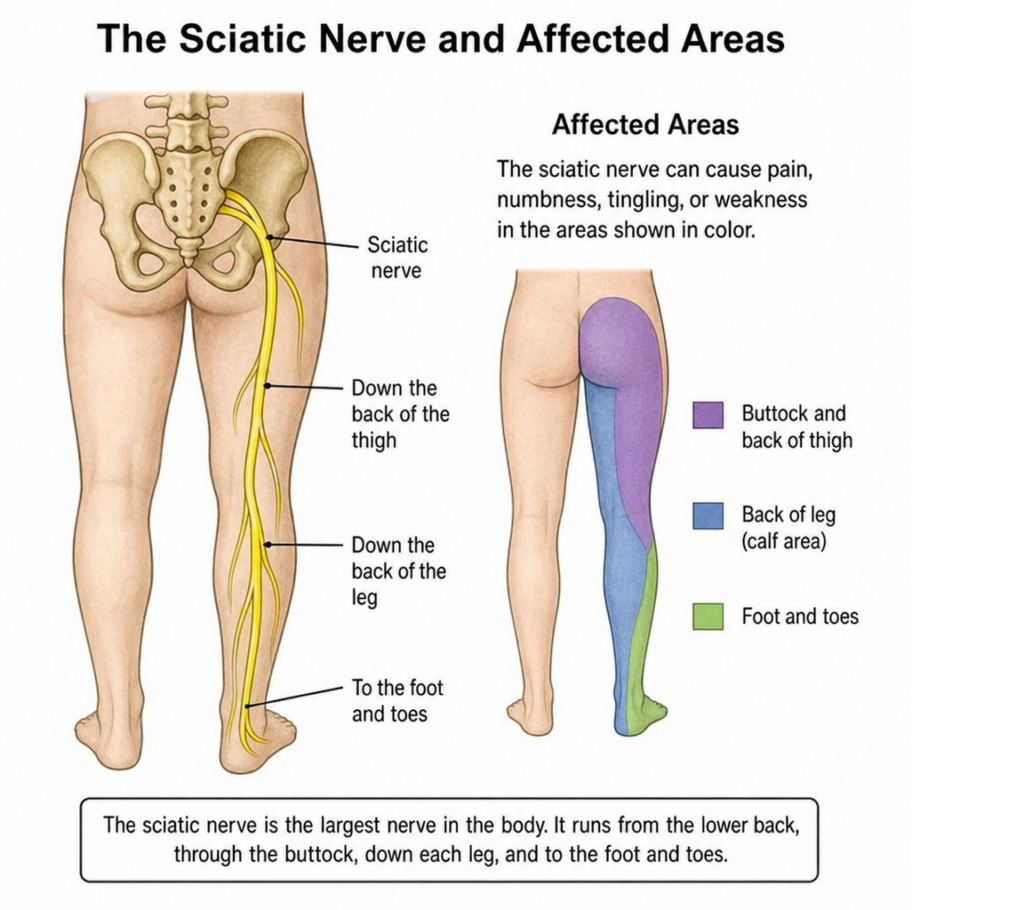
Sciatica is a common condition that affects many people around the world. It causes pain that travels along the sciatic nerve, which runs from the lower back through the hips and down each leg.
Understanding sciatica is crucial for effective management. The pain can be mild or severe, and it may affect daily life. Learning the causes and signs can help people seek treatment sooner.
Several things can trigger sciatica, including herniated discs and spinal stenosis. Finding the cause early and getting treatment can help prevent chronic problems.
Treatment for sciatica can include physical therapy, specific stretches, and other care. These steps aim to reduce pain and improve mobility.
Lifestyle changes also matter. A healthy weight, good posture, regular exercise, and stress management can help prevent it from coming back.
What Is Sciatica?
Sciatica is pain from irritation or pressure on the sciatic nerve. The pain may be felt in the lower back, hips, and legs. The sciatic nerve is the longest nerve in the body, which is why sciatica can be so severe.
Many things can cause sciatica, and knowing them matters for proper treatment. It is often a sign of another problem, not a disease by itself. That is why sciatica needs close attention.
To better understand sciatica, consider these key points:
- Sciatica is most common in the 30 to 50 age group.
- It results from many spine-related disorders.
- The pain can be sharp, burning, or tingling.
Managing sciatica means treating the root cause. That can bring better and longer-lasting relief from the pain.
Common Causes of Sciatica
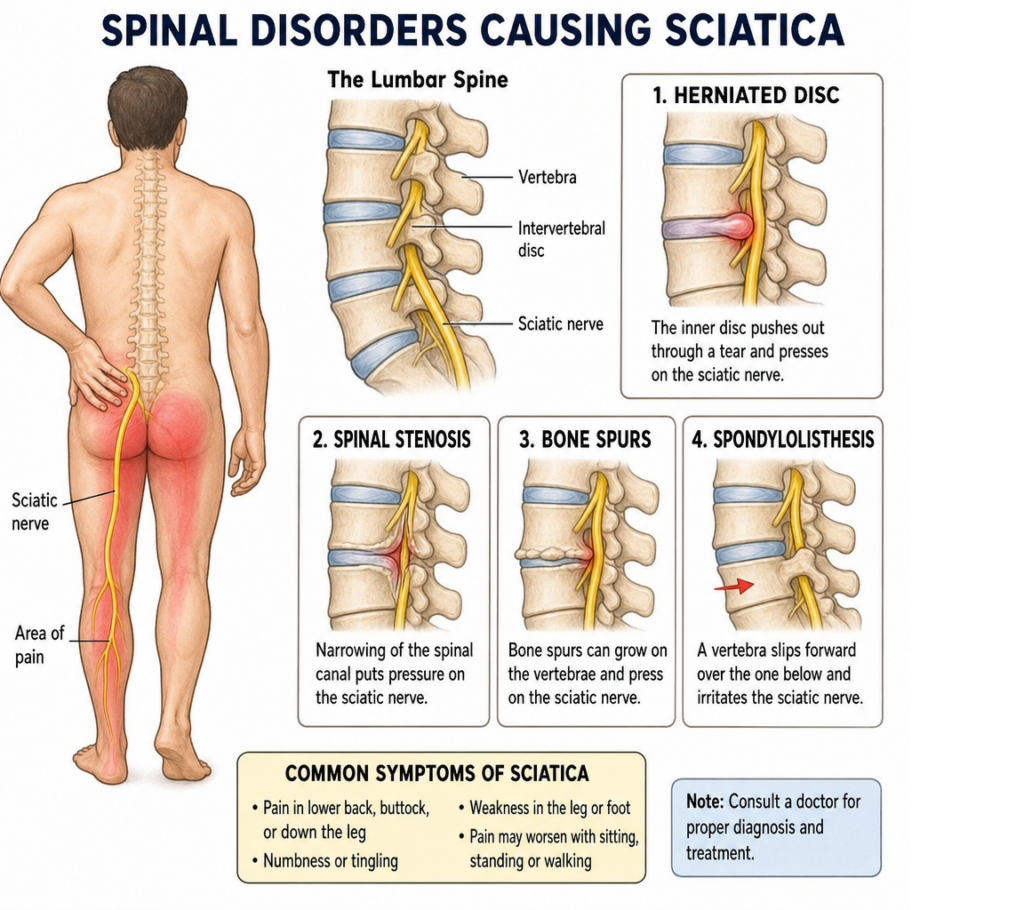
Sciatica usually comes from spine disorders. Herniated discs and spinal stenosis are the most common causes. These problems put pressure on the sciatic nerve and cause pain.
Other issues can also lead to sciatica. For example, the piriformis muscle in the buttocks can irritate the nerve. Pregnancy can also add pressure on the spine and trigger sciatica.
Here are some common causes:
- Herniated disc
- Spinal stenosis
- Piriformis syndrome
- Pregnancy-related pressure
Understanding these causes helps doctors choose the right treatment. Finding the main problem is key to easing nerve pressure. This can lead to better sciatica pain relief and a faster recovery.
Recognizing Sciatica Symptoms
Sciatica symptoms can range from mild to severe. The pain usually follows the path of the sciatic nerve.
Common signs include a sharp pain from the lower back to the leg. Tingling, numbness, and weakness in the leg may also happen.
Spotting these signs early is important. It can help people get medical advice sooner and start treatment faster.
Here’s a list of common symptoms:
- Sharp, shooting leg pain
- Tingling or numbness
- Muscle weakness in the leg
Diagnosing Sciatica
Diagnosis often starts with a physical exam. A healthcare provider checks flexibility, strength, reflexes, and symptom history.
If symptoms keep going, imaging tests may follow. MRI or CT scans can show herniated discs or other spine problems.
Common diagnostic steps include:
- Physical examination
- Review of medical history
- MRI or CT scan testing
Sciatica Pain Relief: Treatment Options
Sciatica pain can be severe, but many treatments can help. The first steps often include rest and over-the-counter medicine. Ice or heat can also ease swelling and pain.
Physical therapy is important for long-term management. Therapists make personal plans with exercises that build muscle strength. Better flexibility can reduce pressure on the sciatic nerve and support sciatica pain relief.
Common treatments for sciatica pain include:
- Over-the-counter pain medications
- Ice and heat therapy
Alternative care can also help. Many people find chiropractic care useful. Spinal adjustments may ease nerve pressure and improve function.
Popular alternative therapies:
- Chiropractic adjustments
- Acupuncture
For severe cases, doctors may suggest surgery. This option is typically for persistent pain or nerve issues. Surgery works by easing pressure on the nerve through a targeted procedure.
Sciatica Stretches and Exercises
Adding stretches to daily routines can offer significant relief. Regular stretching improves flexibility and lowers pressure on the sciatic nerve. Doing it often matters most.
Simple exercises build core muscles. This helps support the spine and keeps posture steady. A stronger core can reduce strain in the lower back and lower pain.
These sciatica stretches can ease pressure on the nerve. Examples of helpful stretches include:
- Knee-to-chest stretches
- Hamstring stretches
- Piriformis stretches
Yoga and Pilates can also help people with sciatica. These workouts build flexibility and core strength. Gentle routines may prevent flare-ups and improve movement.

Medical and Alternative Therapies
Several medical treatments target sciatica. Anti-inflammatory drugs can reduce swelling and offer relief. These drugs are often the first step in care.
Epidural steroid injections may help with long-lasting pain. They send medicine to the inflamed area. The relief may be temporary, but it can still help some people.
Medical therapies include:
- Anti-inflammatory medications
- Epidural steroid injections
Alternative care can also work with medical treatment. Acupuncture is one option to consider. It may ease pain pathways and lower discomfort without medicine.
Preventing and Managing Sciatica
Prevention plays a big role in sciatica care. A healthy weight lowers pressure on the spine, while regular exercise strengthens the back and core muscles and helps protect against injury.
Daily habits also matter. Adjusting workspaces for better ergonomics can make a big difference. Good posture, safe lifting, and stress management are also important.
Essential prevention tips:
- Maintain a healthy weight
- Engage in regular exercise
- Ensure ergonomic workspaces
Adding these habits to daily life can help prevent it from returning. By taking simple steps early, you can manage sciatica well. Staying aware of your movements helps protect spinal health over time.
When to See a Doctor
Some signs mean it is time to see a doctor for sciatica. Get medical help if pain lasts even after home care. Sudden severe pain, numbness, or weakness in the leg also needs prompt care.
Consider seeing a doctor when:
- Pain worsens or does not improve
- Leg weakness or loss of feeling occurs
- Daily tasks become hard
Quick medical care can help prevent problems and lead to the right treatment. Do not ignore severe or lasting symptoms. Putting your health first is key for recovery and well-being.
Conclusion
Understanding sciatica helps with symptom care. Early action, the right stretches, and medical support can improve quality of life. Stay proactive with your health.